
Cycling in Melbourne: Bike Lanes, Road Rules and Helmet Laws?
Cycling in Melbourne is a practical way to get around and discover the city's parks, waterfronts, and neighbourhoods. By choosing appropriate bike lanes and paths, wearing a helmet, following road rules, and taking care around trams and turning vehicles, you can make your rides safer and more enjoyable.
Melbourne Sphere editors · Editorial team
5 min read

In this article
Cycling in Melbourne is a convenient way to commute, explore the city, and enjoy its parks and waterfront paths. The city has marked bike lanes, dedicated cycling paths, and shared trails, but cyclists must follow Victoria's road rules, wear an approved helmet, and take extra care around trams, pedestrians, and turning vehicles.
Whether you're a local resident, an international student, or a visitor planning to explore Melbourne on two wheels, here's what you need to know before setting off.
1. Where can you find bike lanes in Melbourne?

Melbourne has a combination of on-road bicycle lanes, separated cycleways, and off-road paths. Look for bicycle symbols, lane markings, signs, and green-painted sections at certain intersections.
Popular areas for cycling include:
Melbourne CBD: Useful for commuting, although busy intersections and tram tracks require extra attention.
Yarra River paths: Scenic routes for recreational rides, with views of the city and river.
Capital City Trail: A well-known route connecting parks, riverfront areas, and inner-city neighbourhoods.
Albert Park: A popular area for recreational cycling around the lake and nearby paths.
Docklands: Waterfront paths and connections to central Melbourne make this area appealing for relaxed rides.
2. Understand Melbourne's cycling road rules
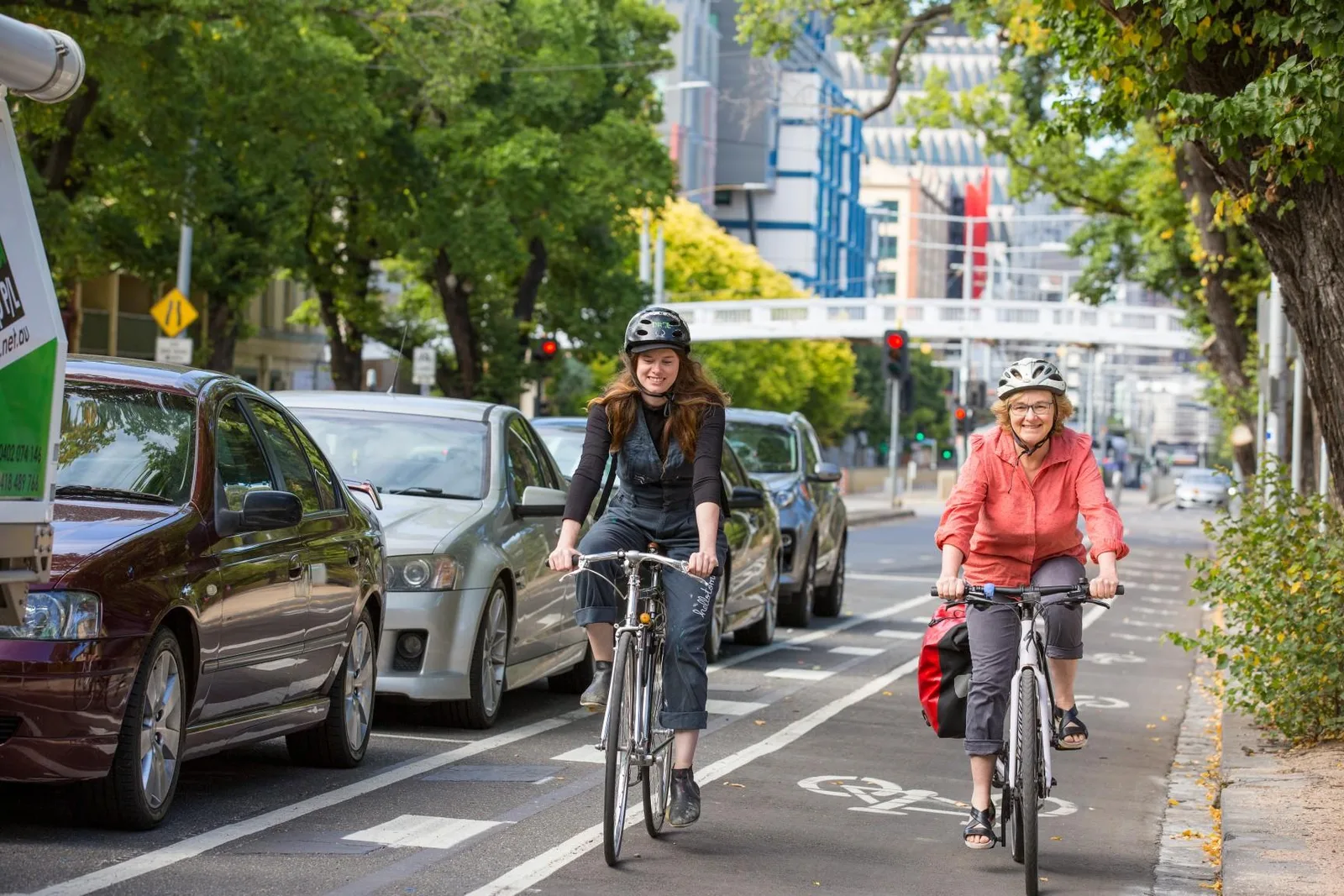
Bicycles are treated as vehicles under Victoria's road rules, so cyclists must obey traffic lights, stop signs, give-way signs, and other applicable road rules.
Here are some important rules to remember:
Use marked bike lanes: You must use a marked on-road bike lane when travelling in its direction unless it is impractical or unsafe.
Signal your turns: Use clear hand signals when turning right and communicate your intentions before changing direction.
Keep left on shared paths: Give way to pedestrians and use your bell or voice when overtaking.
Avoid riding on footpaths: Generally, only children aged 12 and under and certain exempt riders may cycle on footpaths. Adults may also ride on footpaths when accompanying a child aged 12 or under.
Do not ride through red lights: Follow traffic signals and road signs just as other road users must.
Take care at roundabouts: Stay visible, signal where required, and watch for vehicles entering or exiting.
Cyclists are permitted to ride two abreast, provided they are no more than 1.5 metres apart, subject to the applicable rules.
3. Helmet laws in Victoria

Wearing a bicycle helmet is compulsory in Victoria, including when riding a conventional bicycle or an e-bike.
Your helmet should:
Meet an approved safety standard, such as AS/NZS 2063.
Fit firmly without rocking from side to side.
Sit level on your head, just above your eyebrows.
Have straps fastened securely under your chin.
Replace a helmet after a significant impact, even if there is no obvious damage. Transport Victoria also recommends replacing helmets periodically as materials age.
Limited exemptions exist for certain medical conditions and religious headwear, subject to the applicable requirements.
4. Cycling near Melbourne trams

Melbourne's tram network is one of the city's defining features, but tram tracks can be hazardous for cyclists, particularly when crossing them at a shallow angle.
Follow these safety tips:
Cross tram tracks as close to a right angle as practical.
Avoid turning sharply while your wheels are on the tracks.
Watch for tram doors opening and passengers stepping onto the road.
Stop behind a tram when passengers are boarding or alighting directly onto the roadway, and wait until the doors close and the road is clear.
Never assume a tram driver or vehicle driver has seen you.
These precautions are especially important in the CBD, where cyclists, cars, pedestrians, and trams share busy streets.
5. Bicycle lights and visibility at night

If you're cycling at night or in low-light conditions, your bicycle must have:
A white front light visible from at least 200 metres.
A red rear light visible from at least 200 metres.
A red rear reflector visible from at least 50 metres.
Wearing reflective or light-coloured clothing can also help other road users see you. Even during daylight, lights can improve visibility in poor weather or shaded areas.
Check your lights before leaving, especially if your journey may continue after sunset.
6. How to ride safely around cars and buses

Busy roads can feel intimidating if you're new to cycling in Melbourne. Choosing a quieter parallel street or separated cycling path can make your journey more comfortable.
Keep these practices in mind:
Stay alert for car doors opening into your path.
Watch for vehicles turning left across your route.
Avoid lingering in heavy vehicles' blind spots.
Signal before turning and check behind you before changing lanes.
Use a bicycle bell when approaching pedestrians on shared paths.
Give buses space at stops and watch for passengers crossing your path.
Victorian law requires drivers to leave at least 1 metre when passing a cyclist on roads with speed limits up to 60 km/h, and 1.5 metres where the speed limit is above 60 km/h.
7. Can you cycle on Melbourne footpaths and shared trails?

Melbourne has many attractive off-road paths, but it's important to understand the difference between a footpath, a shared path, and a designated bicycle path.
Footpaths: Generally restricted to cyclists aged 12 and under, accompanying adults, and certain exempt riders.
Shared paths: Open to cyclists and pedestrians. Cyclists must give way to pedestrians and keep left.
Dedicated bike paths: Intended for cycling, subject to the signs and conditions along the route.
Urban freeways: Cycling is prohibited on many urban freeways, including the Tullamarine, Monash, and West Gate freeways.
Always check signs at the beginning of a path because permitted uses can vary.
8. What should you carry when cycling in Melbourne?

You don't need expensive equipment to start cycling, but a few essentials make riding safer and more convenient.
A properly fitted, approved helmet.
Front and rear lights.
A bicycle bell.
A sturdy lock for parking your bike.
Water and weather-appropriate clothing.
A basic repair kit and a pump for longer rides.
A phone with route information, secured safely while riding.
If you're using an e-bike, check that it complies with Victorian requirements. Legal e-bikes generally do not require registration or a driver's licence, but the rules depend on the bike's specifications.
More from Melbourne Sphere

Getting around
Medicare vs OSHC: A Guide to Health Insurance in Australia?
Medicare and OSHC both help people manage healthcare expenses in Australia, but they are designed for different groups. Medicare is intended for eligible residents and certain visitors, while OSHC helps international students access eligible medical and hospital services during their studies.
By Melbourne Sphere editors · Editorial team

Getting around
Where to Live Near Monash University: Best Suburbs, Rent and Transport ?
Clayton is a useful starting point for students who want to stay close to campus. Huntingdale is worth considering for rail access, Oakleigh offers shops and restaurants, and Notting Hill and Mulgrave provide additional residential options.
By Melbourne Sphere editors · Editorial team

Getting around
How to Convert Your Overseas Licence in Victoria, Step by Step ?
Converting an overseas driver licence in Victoria is easier to plan when you know your requirements before booking. Start by checking the rules for your issuing country, prepare your original documents and arrange the correct appointment. If tests are required, allow time to study and practise before booking them.
By Melbourne Sphere editors · Editorial team

Getting around
Emergency Numbers in Australia: When to Call 000 or 112?
Knowing the difference between 000 and 112 can help you respond confidently during an emergency in Australia. Call 000 for urgent police, fire or ambulance assistance. Remember 112 as an alternative mobile emergency number, and save other useful helplines for non-emergency situations.
By Melbourne Sphere editors · Editorial team
Comments
No comments yet. Be the first to join the conversation.
Leave a comment
Every comment is read by a moderator before it appears. Your email address is never published; it is used only to contact you about this comment.